PaperYodha

Prepare

Mock TestsLive TestsPrevious Year PapersPractice
PaperYodha
Previous Year Papers· Real papers, shift-wise

PaperYodha

One platform for SSC, Defence and Engineering entrance exams: mocks in each exam's official pattern, weekly all-India live tests, real previous-year papers and topic-wise practice.

Coming soon: IBPS PO · SBI Clerk · MPPSC · CAT

SSC

  • SSC CGL
  • SSC CHSL
  • SSC MTS
  • SSC GD Constable

Defence & Engineering

  • NDA
  • JEE Main
  • JEE Advanced

Platform

  • Mock tests
  • Live tests
  • Previous year papers
  • Practice

AboutContactPrivacy noticeTerms of usePricingRefunds & cancellationYour data

PaperYodha is an independent preparation platform and is not affiliated with the Staff Selection Commission, UPSC, the National Testing Agency or the IITs. Mock questions are original. Exam patterns are taken from published sources; always confirm details in the official notification.

MocksLivePYQsPractice
Mock TestsLive TestsPrevious Year PapersPractice
MocksLivePYQsPractice
← JEE Main topics

Other Chemistry · JEE Main previous year questions

650 questions asked across 20 exam years, newest first

Other Chemistry has appeared 650 times in JEE Main papers between 2002 and 2026, about 4.7 questions per paper, from 25 per paper in 2002 to 2.6 per paper in 2026. Every question is listed below with its answer and the paper it came from. Use Practise this topic to attempt them as a timed set.

Year-wise papersTopic-wise questions
Practise this topic
All years 6502026 442025 342024 852023 962022 742021 582020 542019 552018 142017 142016 92015 62014 62012 282010 72009 52006 92005 132004 142002 25

2012 28 questions

  1. Q682012 · 26 May 2012 · Shift 1

    The solubility of PbI2​ at 25∘C is 0.7 g L−1. The solubility product of PbI2​ at this temperature is (molar mass of PbI2​=461.2 g mol−1)

    1. A.1.40×10−9
    2. B.0.14×10−9
    3. C.140×10−9
    4. D.14.0×10−9
    Show answer

    Answer: D

  2. Q692012 · 26 May 2012 · Shift 1
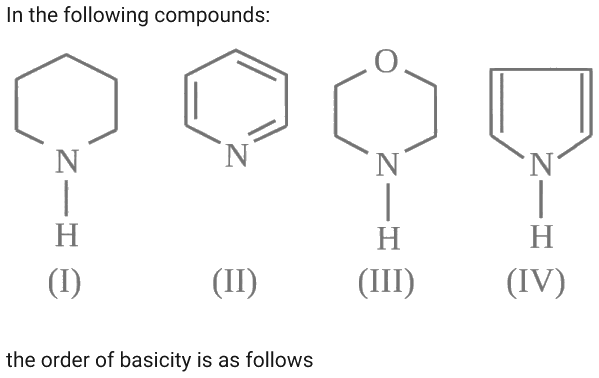
    Chemistry question 9 as printed in the paper
    1. A.IV>III>II>I
    2. B.III>I>II>IV
    3. C.II>III>I>IV
    4. D.I>III>II>IV
    Show answer

    Answer: D

  3. Q702012 · 26 May 2012 · Shift 1

    Maleic acid and fumaric acids are

    1. A.Chain isomers
    2. B.Functional isomers
    3. C.Tautomers
    4. D.Geometrical isomers
    Show answer

    Answer: D

  4. Q762012 · 26 May 2012 · Shift 1

    The number of S−S bonds in SO3​,S2​O32−​,S2​O62−​ and S2​O82−​ respectively are

    1. A.1,0,0,1
    2. B.1,0,1,0
    3. C.0,1,1,0
    4. D.0,1,0,1
    Show answer

    Answer: C

  5. Q782012 · 26 May 2012 · Shift 1

    The number of unpaired electrons in Gadolinium [Z=64] is

    1. A.3
    2. B.8
    3. C.6
    4. D.2
    Show answer

    Answer: B

  6. Q802012 · 26 May 2012 · Shift 1

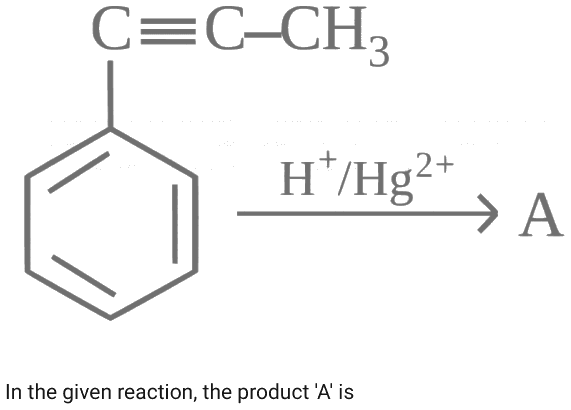
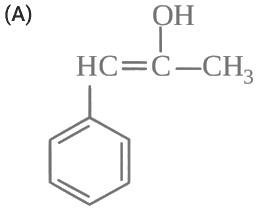
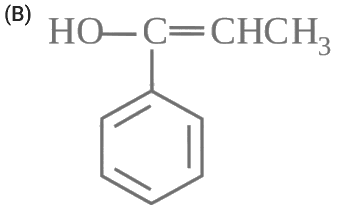
    The hydration of propyne results in formation of

    1. A.Acetone
    2. B.Propanol-1
    3. C.Propene
    4. D.Propanal
    Show answer

    Answer: A

  7. Q822012 · 26 May 2012 · Shift 1

    Which of the following statements is correct?

    1. A.RNA controls the synthesis of proteins.
    2. B.The sugar present in DNA is D-(-)-ribose.
    3. C.RNA has double stranded α-helix structure.
    4. D.DNA mainly occurs in the cytoplasm of the cell.
    Show answer

    Answer: A

  8. Q832012 · 26 May 2012 · Shift 1

    The relationship among most probable velocity, average velocity and root mean square velocity is respectively

    1. A.2​:3​:8/π​
    2. B.2​:8/π​:3​
    3. C.8/π​:3​:2​
    4. D.3​:8/π​:2​
    Show answer

    Answer: B

  9. Q842012 · 26 May 2012 · Shift 1

    Fire extinguishers contain H2​SO4​ and which one of the following?

    1. A.NaHCO3​ and Na2​CO3​
    2. B.Na2​CO3​
    3. C.NaHCO3​
    4. D.CaCO3​
    Show answer

    Answer: A

  10. Q862012 · 26 May 2012 · Shift 1

    Among the following the incorrect statement is

    1. A.Density of crystals remains unaffected due to Frenkel defect.
    2. B.In BCC unit cell the void space is 32%.
    3. C.Density of crystals decreases due to Schottky defect.
    4. D.Electrical conductivity of semiconductors and metals increases with increase in temperature.
    Show answer

    Answer: D

  11. Q612012 · 12 May 2012 · Shift 1

    An aqueous solution of oxalic acid dihydrate contains its 6.3 g in 250 mL. The volume of 0.1 N NaOH required to completely neutralize 10 mL of this solution

    1. A.4 mL
    2. B.20 mL
    3. C.2 mL
    4. D.40 mL
    Show answer

    Answer: D

  12. Q732012 · 12 May 2012 · Shift 1

    The reaction, CH3​CHO[H]Zn(Hg)/Conc. HCl​CH3​CH3​

    1. A.Cannizzaro's reaction
    2. B.Rosenmund reduction
    3. C.Wolff-Kishner reduction
    4. D.Clemmensen reduction
    Show answer

    Answer: D

  13. Q792012 · 12 May 2012 · Shift 1

    Which of the following statements is wrong?

    1. A.Ethyl chloride on reduction with Zn−Cu couple and alcohol gives ethane.
    2. B.The reaction of methyl magnesium bromide with acetone gives butanol-2.
    3. C.Alkyl halides follow the following reactivity sequence on reaction with alkenes. R−I>R−Br>R−Cl>R−F
    4. D.C2​H4​Cl2​ may exist in two isomeric forms
    Show answer

    Answer: B

  14. Q802012 · 12 May 2012 · Shift 1
    Chemistry question 20 as printed in the paper
    1. A.Option 1
    2. B.Option 2
    3. C.Option 3
    4. D.Option 4
    Show answer

    Answer: C

  15. Q832012 · 12 May 2012 · Shift 1

    α,v and u represent most probable velocity, average velocity and root mean square velocity respectively of a gas at a particular temperature. The correct order among the following is

    1. A.u>v>α
    2. B.v>u>α
    3. C.α>u>v
    4. D.u>α>v
    Show answer

    Answer: A

  16. Q872012 · 12 May 2012 · Shift 1

    The correct statement for both the processes of physisorption and chemisorption is

    1. A.both are endothermic
    2. B.chemisorption is endothermic but physisorption is exothermic
    3. C.both are exothermic
    4. D.physisorption is endothermic but chemisorption is exothermic.
    Show answer

    Answer: C

  17. Q902012 · 12 May 2012 · Shift 1

    Chemically heroin is

    1. A.morphine monoacetate
    2. B.morphine dibenzoate
    3. C.morphine diacetate
    4. D.morphine monobenzoate
    Show answer

    Answer: C

  18. Q642012 · 7 May 2012 · Shift 1

    Among the following, the species having the smallest bond is

    1. A.NO−
    2. B.NO+
    3. C.O2​
    4. D.NO
    Show answer

    Answer: B

  19. Q712012 · 7 May 2012 · Shift 1

    Among the following the order of reactivity towards nucleophilic addition is

    1. A.CH3​CHO>CH3​COCH3​>HCHO
    2. B.HCHO>CH3​CHO>CH3​COCH3​
    3. C.CH3​CHO>HCHO>CH3​COCH3​
    4. D.CH3​COCH3​>CH3​CHO>HCHO
    Show answer

    Answer: B

  20. Q742012 · 7 May 2012 · Shift 1

    Reaction rate between two substance A and B is expressed as following: rate=k[A]n[B]m If the concentration of A is doubled and concentration of B is made half of initial concentration, the ratio of the new rate to the earlier rate will be:

    1. A.m+n
    2. B.n−m
    3. C.2(m+n)1​
    4. D.2(n−m)
    Show answer

    Answer: D

  21. Q762012 · 7 May 2012 · Shift 1

    Which is not the correct Statement? (At. nos. Ce=58, Lu=71, La=57, Yb=70)

    1. A.Colour of Yb3+ ion is pink.
    2. B.La3+ is diamagnetic.
    3. C.Ce4+ has f0 configuration.
    4. D.Lu3+ has f14 configuration.
    Show answer

    Answer: A

  22. Q772012 · 7 May 2012 · Shift 1

    How many cyclic structures are possible for C4​H6​?

    1. A.3
    2. B.5
    3. C.6
    4. D.4
    Show answer

    Answer: B

  23. Q782012 · 7 May 2012 · Shift 1

    The most basic compound among the following is

    1. A.Acetanilide
    2. B.Benzylamine
    3. C.p-Nitro aniline
    4. D.Aniline
    Show answer

    Answer: B

  24. Q792012 · 7 May 2012 · Shift 1

    C2​H5​BrAgCN​XReductionZn−Hg/HCl​Y, Here Y is

    1. A.Ethyl methyl amine
    2. B.n-propylamine
    3. C.Isopropylamine
    4. D.Ethylamine
    Show answer

    Answer: A

  25. Q812012 · 7 May 2012 · Shift 1

    In which of the following arrangements, the sequence is not strictly according to the property written against it?

    1. A.CO2​<SiO2​<SnO2​<PbO2​ : increasing oxidising power
    2. B.NH3​<PH3​<AsH3​<SbH3​ : increasing basic strength
    3. C.HF<HCl<HBr<HI : increasing acid strength
    4. D.B<C<O<N : increasing first ionisation enthalpy
    Show answer

    Answer: B

More Chemistry topics in JEE Main

  • Chemical & Ionic Equilibrium (277)
  • Organic Reactions & Conversions (262)
  • General Organic Chemistry & Isomerism (235)
  • p-Block Elements (193)
  • Mole Concept & Stoichiometry (179)
  • Atomic Structure (177)
  • Chemical Bonding (174)
  • Coordination Compounds (169)
← PreviousPage 23 of 26Next →