139 questions asked across 4 exam years, newest first
The position of how many letters will remain unchanged if each of the letters in the word ‘SPIDER’ is arranged in the English alphabetical order?
Answer: A
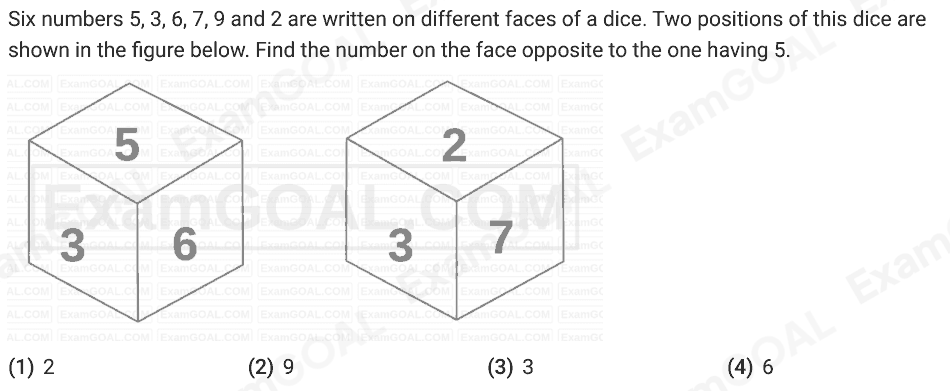
Six numbers 5, 3, 6, 7, 9 and 2 are written on different faces of a dice. Two positions of this dice are shown in the figure below. Find the number on the face opposite to the one having 5.
Answer: A
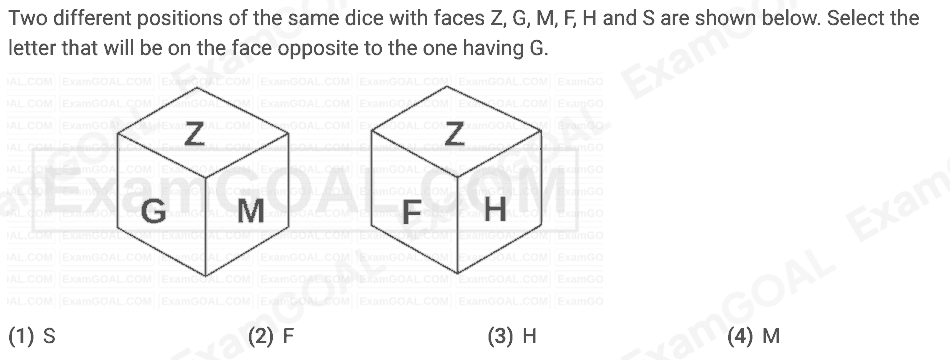
Two different positions of the same dice with faces Z, G, M, F, H and S are shown below. Select the letter that will be on the face opposite to the one having G.
Answer: B
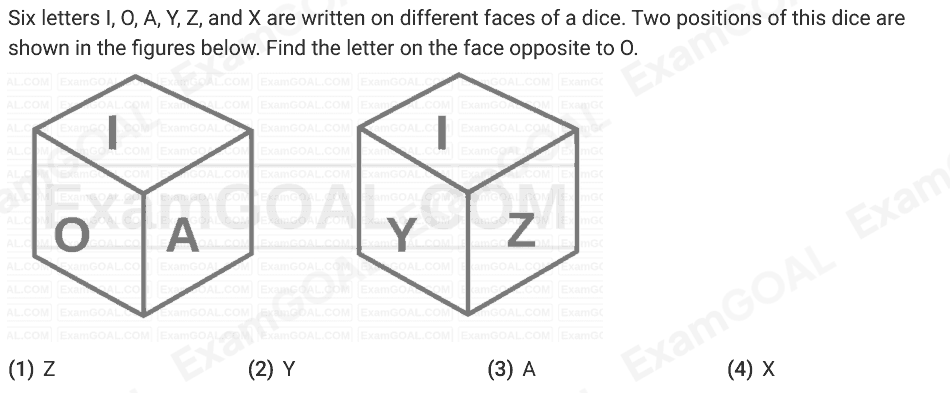
Six letters I, O, A, Y, Z, and X are written on different faces of a dice. Two positions of this dice are shown in the figures below. Find the letter on the face opposite to O.
Answer: B
The position of how many letters will remain unchanged if all the letters in the word MOLTEN are arranged in English alphabetical order?
Answer: C
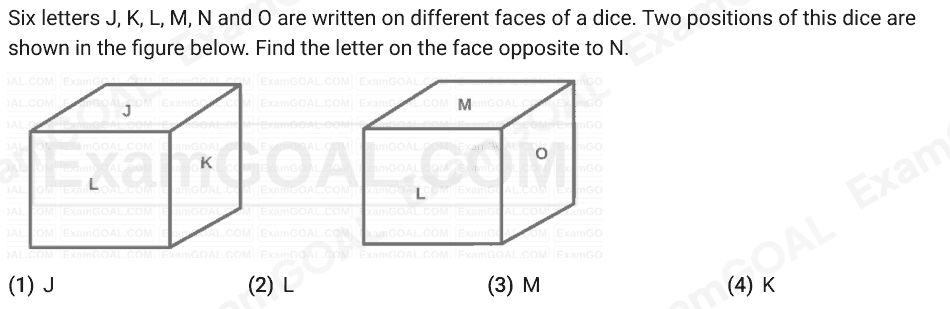
Six letters J, K, L, M, N and O are written on different faces of a dice. Two positions of this dice are shown in the figure below. Find the letter on the face opposite to N.
Answer: B
The position of how many letters will change if each of the letters in the word 'CORNFLAKES' is rearranged in the English alphabetical order from left to right?
Answer: A
The position of how many letters will remain unchanged if all the letters in the word RICKET are arranged in English alphabetical order?
Answer: D
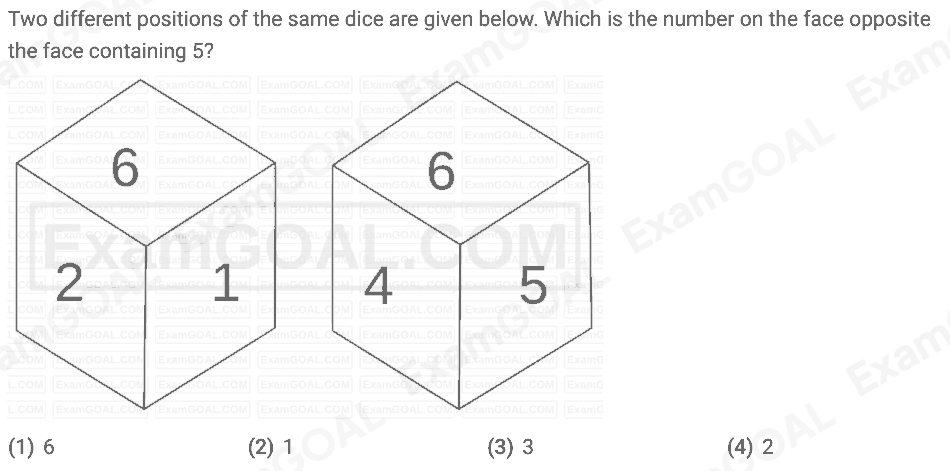
Two different positions of the same dice are given below. Which is the number on the face opposite the face containing 5?
Answer: B
The position of how many letters will remain unchanged if each of the letters in the word ‘DOWNSIZE’ is re-arranged in the English alphabetical order from left to right?
Answer: B
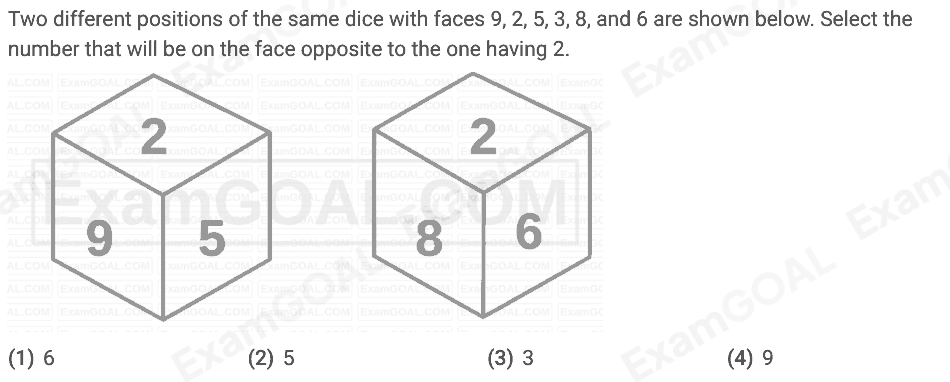
Two different positions of the same dice with faces 9, 2, 5, 3, 8, and 6 are shown below. Select the number that will be on the face opposite to the one having 2.
Answer: C
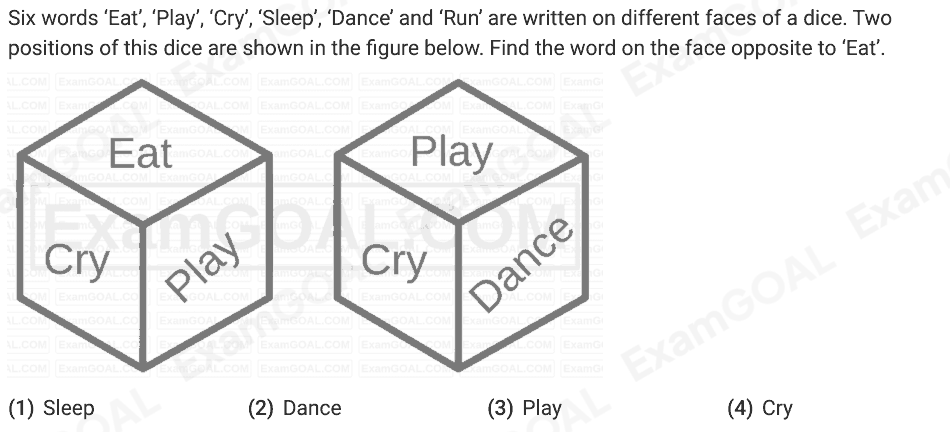
Six words ‘Eat’, ‘Play’, ‘Cry’, ‘Sleep’, ‘Dance’ and ‘Run’ are written on different faces of a dice. Two positions of this dice are shown in the figure below. Find the word on the face opposite to ‘Eat’.
Answer: B
The position of how many letters will remain unchanged if each of the letters in the word ‘DELIGHT’ is arranged in the English alphabetical order?
Answer: C
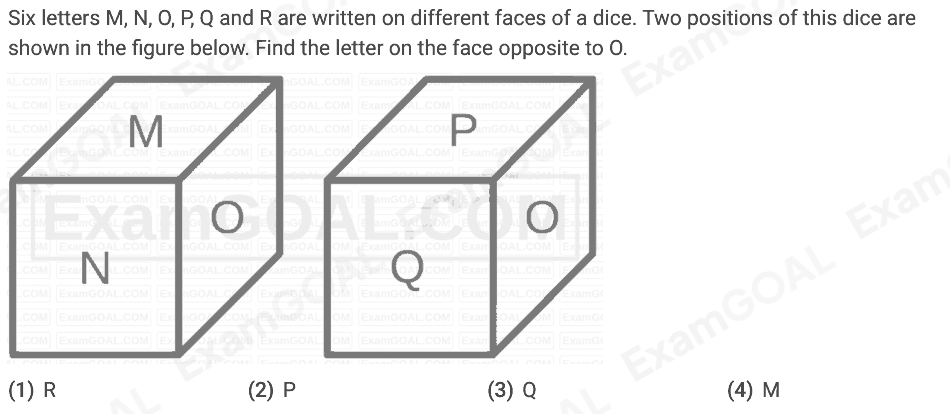
Six letters M, N, O, P, Q and R are written on different faces of a dice. Two positions of this dice are shown in the figure below. Find the letter on the face opposite to O.
Answer: A
The position(s) of how many letters will remain unchanged if all the letters in the word ‘ASTEROID’ are arranged in English alphabetical order?
Answer: C
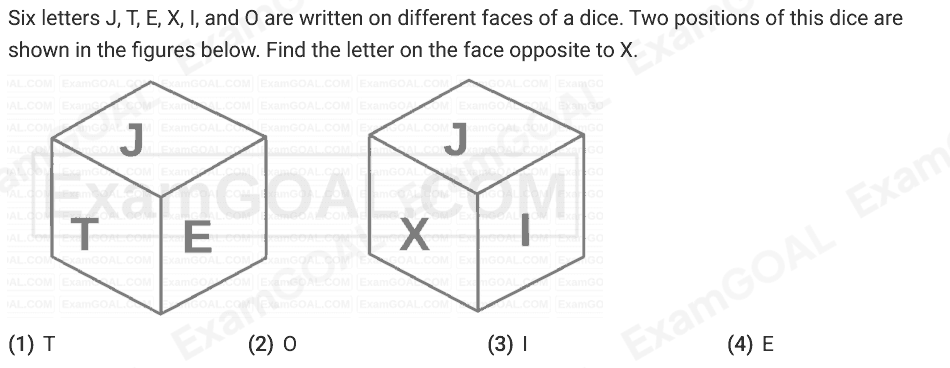
Six letters J, T, E, X, I, and O are written on different faces of a dice. Two positions of this dice are shown in the figures below. Find the letter on the face opposite to X.
Answer: A
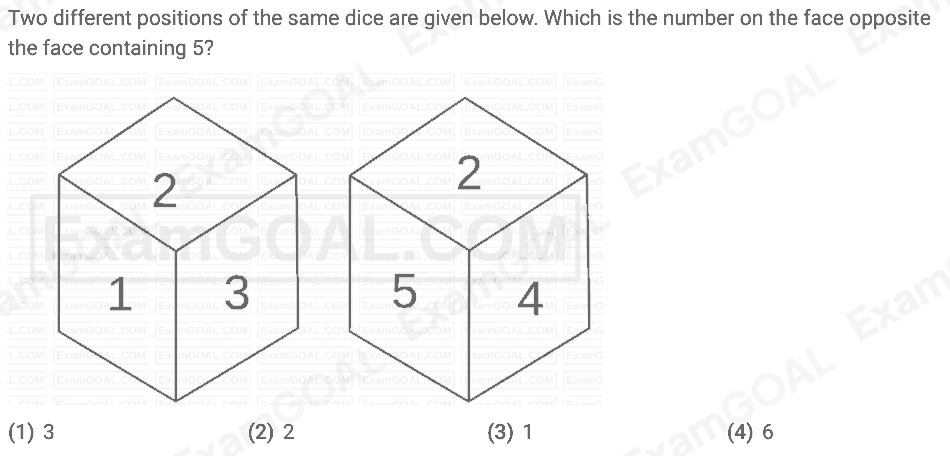
Two different positions of the same dice are given below. Which is the number on the face opposite the face containing 5?
Answer: C
The position of how many letters will remain unchanged if each of the letters in the word ‘SIGNATURE’ is re-arranged in the English alphabetical order from left to right?
Answer: A
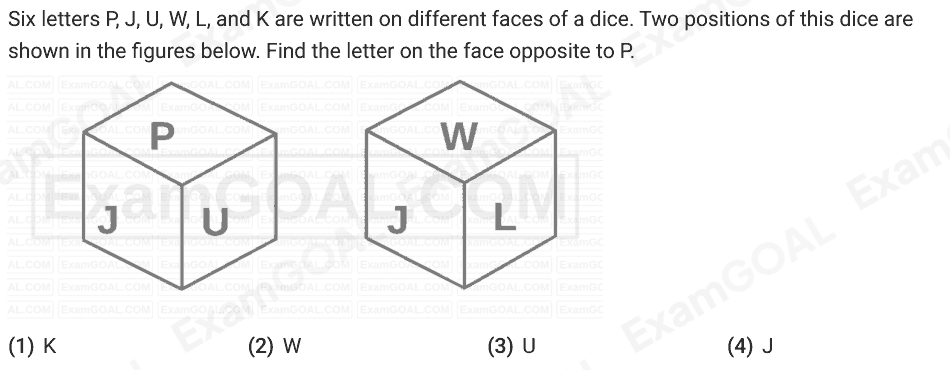
Six letters P, J, U, W, L, and K are written on different faces of a dice. Two positions of this dice are shown in the figures below. Find the letter on the face opposite to P.
Answer: B
The position of how many letters will remain unchanged if all the letters in the word MOBILE are arranged in English alphabetical order?
Answer: C
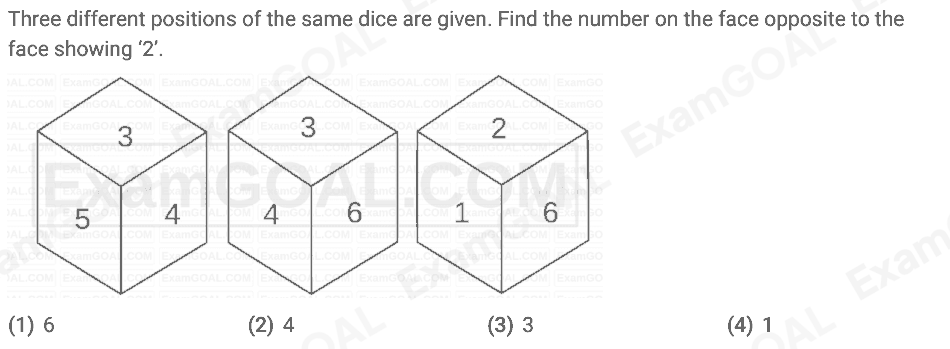
Three different positions of the same dice are given. Find the number on the face opposite to the face showing ‘2’.
Answer: C
The position(s) of how many letters will remain unchanged if all the letters in the word 'LAUNDER' are arranged in English alphabetical order?
Answer: B
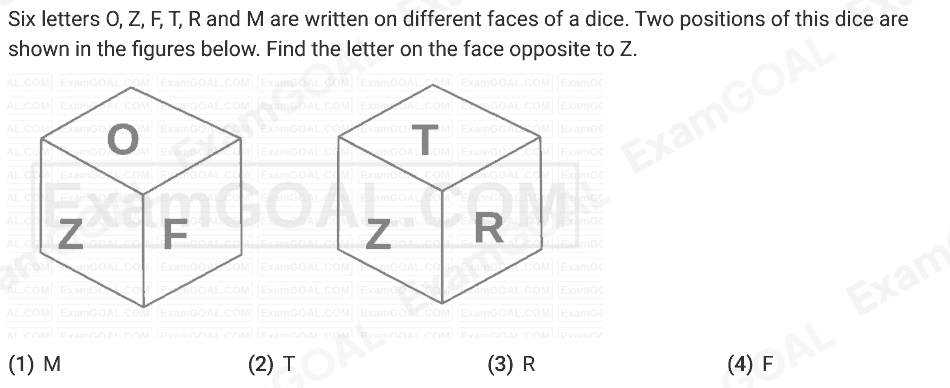
Six letters O, Z, F, T, R and M are written on different faces of a dice. Two positions of this dice are shown in the figures below. Find the letter on the face opposite to Z.
Answer: A
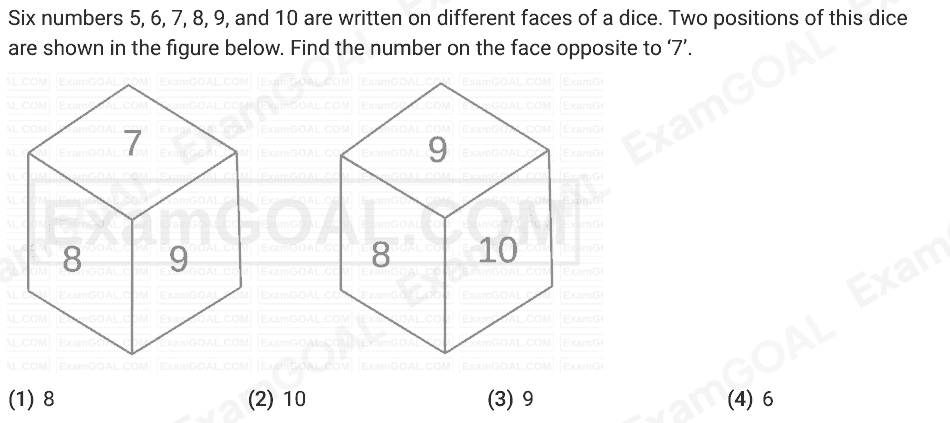
Six numbers 5, 6, 7, 8, 9, and 10 are written on different faces of a dice. Two positions of this dice are shown in the figure below. Find the number on the face opposite to ‘7’.
Answer: B
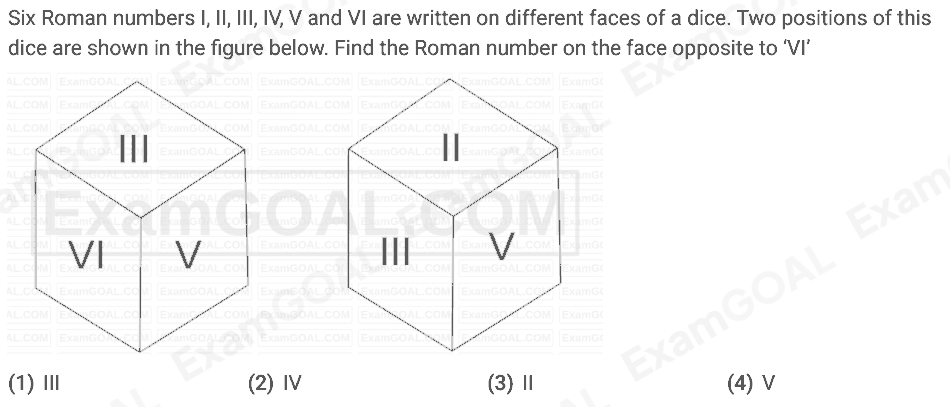
Six Roman numbers I, II, III, IV, V and VI are written on different faces of a dice. Two positions of this dice are shown in the figure below. Find the Roman number on the face opposite to ‘VI’
Answer: C
