193 questions asked across 20 exam years, newest first
The correct statement with respect to dinitrogen is :
Answer: B
The average molar mass of chlorine is . The ratio of to in naturally occuring chlorine is close to :
Answer: C
Answer: C
In a molecule of pyrophosphoric acid, the number of P - OH, P = O and P - O - P bonds/moiety(ies) respectively are :
Answer: B
The volume (in mL) of 0.1 N NaOH required to neutralise 10 mL of 0.1 N phosphinic acid is ___________.
Answer: 10


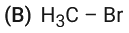
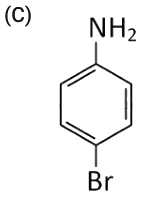
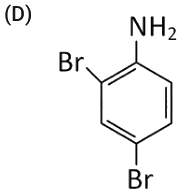
Answer: C
The statement that is not true about ozone is :
Answer: A
The shape / structure of and , respectively, are
Answer: A
Two elements A and B have similar chemical properties. They don’t form solid hydrogencarbonates, but react with nitrogen to form nitrides. A and B, respectively, are :
Answer: A
Amongst the following statements regarding adsorption, those that are valid are (a) becomes less negative as adsorption proceeds (b) On a given adsorbent, ammonia is adsorbed more than nitrogen gas (c) On adsorption, the residual force acting along the surface of the adsorbent increases (d) With increase in temperature, the equilibrium concentration of adsorbate increases
Answer: B
If the magnetic moment of a dioxygen species is 1.73 B.M, it may be :
Answer: A
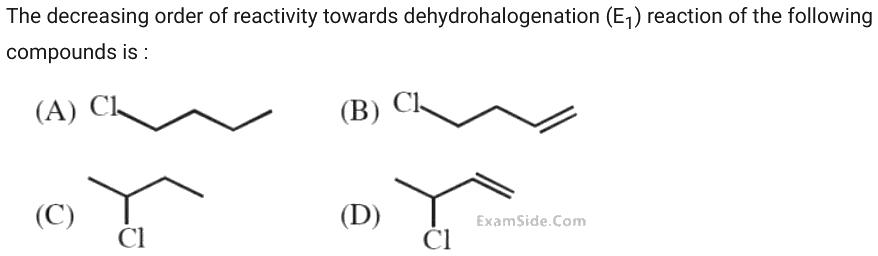
Answer: B
The number of bonds between sulphur and oxygen atoms in and the number of bonds between sulphur and sulphur atoms in rhombic sulphur, respectively, are :
Answer: D
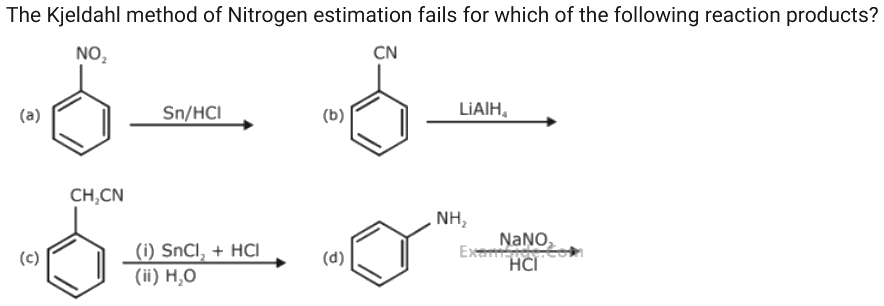
Kjeldahl's method cannot be used to estimate nitrogen for which of the following compounds?
Answer: C
A metal (A) on heating in nitrogen gas gives compound B. B on treatment with gives a colourless gas which when passed through solution gives a dark blue-violet coloured solution. A and B respectively, are :
Answer: C
White Phosphorus on reaction with concentrated solution in an inert atmosphere of gives phosphine and compound (X). (X) on acidification with gives compound (Y). The basicity of compound (Y) is :
Answer: C
The electron gain enthalpy (in kJ/mol) of fluorine, chlorine, bromine and iodine, respectively are:
Answer: C
