193 questions asked across 20 exam years, newest first
29.5 mg of an organic compound containing nitrogen was digested according to Kjeldahl’s method and the evolved ammonia was absorbed in 20 mL of 0.1 M HCl solution. The excess of the acid required 15 mL of 0.1 M NaOH solution for complete neutralization. The percentage of nitrogen in the compound is
Answer: C
Which one of the following reactions of Xenon compounds is not feasible?
Answer: A
The enthalpy changes for the following processes are listed below : Given that the standard states for iodine and chlorine are and , the standard enthalpy of formation for is :
Answer: C
for the formation of carbon monoxide (CO) from its elements at is : ()
Answer: B

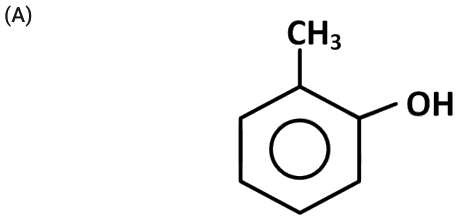
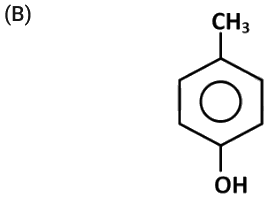
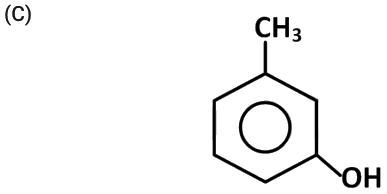
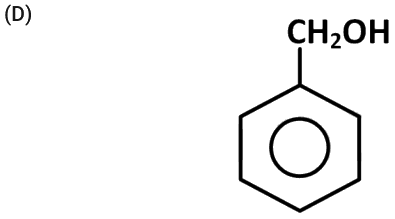
Answer: C
2-methylbutane on reacting with bromine in the presence of sunlight gives mainly
Answer: B
Elimination of bromine from 2-bromobutane results in the formation of-
Answer: B
An organic compound having molecular mass 60 is found to contain , and while rest is oxygen. On heating it gives along with a solid residue. The solid residue give violet colour with alkaline copper sulphate solution. The compound is
Answer: C
The molecular shapes of , and are
Answer: D
The number of hydrogen atom(s) attached to phosphorus atom in hypophosphorous acid is :
Answer: B
Heating an aqueous solution of aluminium chloride to dryness will give :
Answer: C
In silicon dioxide :
Answer: A
The structure of diborane () contains :
Answer: A
The ammonia evolved from the treatment of 0.30 g of an organic compound for the estimation of nitrogen was passed in 100 mL of 0.1 M sulphuric acid. The excess of acid required 20 mL of 0.5 M sodium hydroxide solution for complete neutralization. The organic compound is
Answer: A
The states of hybridization of boron and oxygen atoms in boric acid () are respectively
Answer: D
Which among the following factors is the most important in making fluorine the strongest oxidizing halogen?
Answer: C
Aluminium chloride exists as dimer, in solid state as well as in solution of non-polar solvents such as benzene. When dissolved in water, it gives :
Answer: D
In case of nitrogen, is possible but not NCl5 while in case of phosphorous, as well as are possible. It is due to :
Answer: A
