277 questions asked across 20 exam years, newest first
Consider two Group IV metal ions and . A solution containing and is saturated with . The pH at which the metal sulphide YS will form as a precipitate is ____ . (Nearest integer) (Given: at , at , in solution, , , , )
Answer: 4
Consider the general reaction given below at 400 K . The values of and are studied under the same condition of temperature but variation in and . (i) and appropriate units (ii) and appropriate units The values of and in (i) and (ii) respectively are :
Answer: A
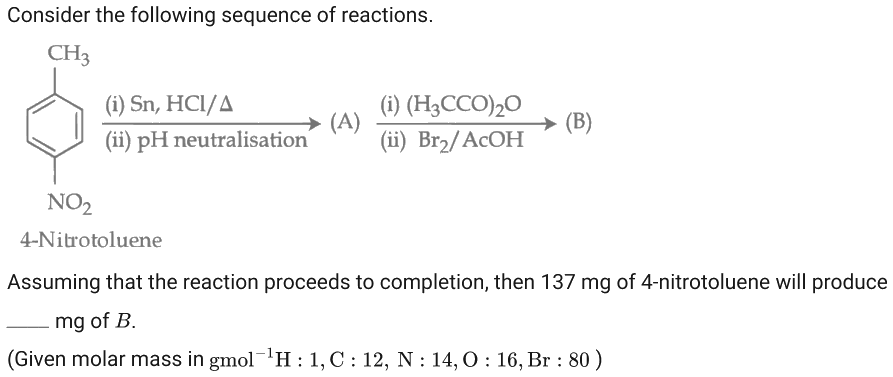
Answer: B
For the following gas phase equilibrium reaction at constant temperature, if the total pressure is and the pressure equilibrium constant () is , then the degree of dissociation is given as . The value of is ____ . (nearest integer)
Answer: 125
It is noticed that is more stable than but is less stable than . Observe the following reactions. Identify the correct set from the following
Answer: B
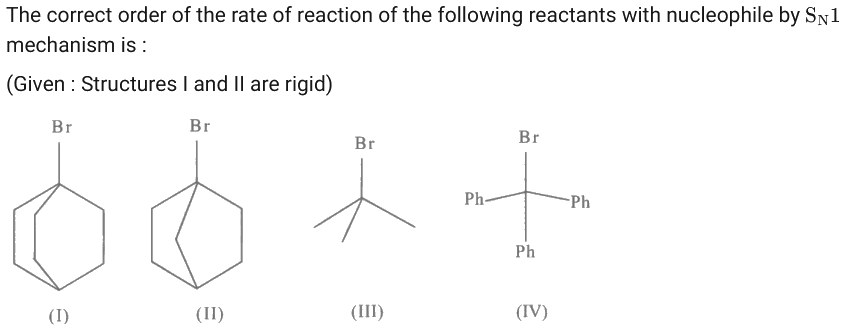
Answer: B
A first row transition metal does not liberate gas from dilute HCl .1 mol of aqueous solution of is treated with excess of aqueous KCN and then is passed through the solution. The amount of MS (metal sulphide) formed from the above reaction is ____ mol.
Answer: C

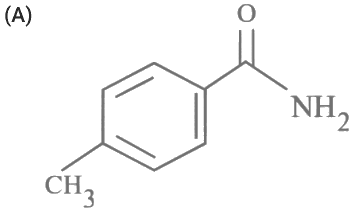
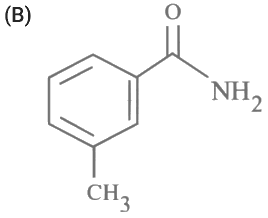
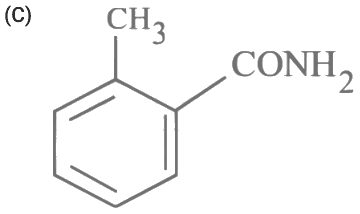
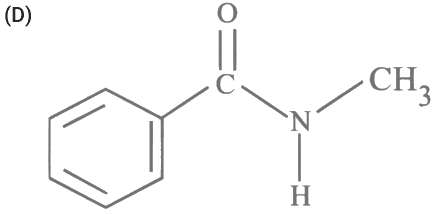
Answer: A
Dissociation of a gas takes place according to the following chemical reaction. At equilibrium, the total pressure is 1 bar at 300 K . The standard Gibbs energy of formation of the involved substances has been provided below: The degree of dissociation of is given by where ____. (Nearest integer). [ Given : ] Assume degree of dissociation is not negligible.
Answer: 33
Consider the following reactions. In the above reactions, A, B and X are respectively.
Answer: C
Given below are two statements : Statement I : The number of pairs among and , which contain oxides that are both amphoteric is 2 . Statement II : is an electron deficient molecule, can act as a Lewis acid, forms adduct with and has a trigonal planar geometry. In the light of the above statements, choose the correct answer from the options given below :
Answer: C
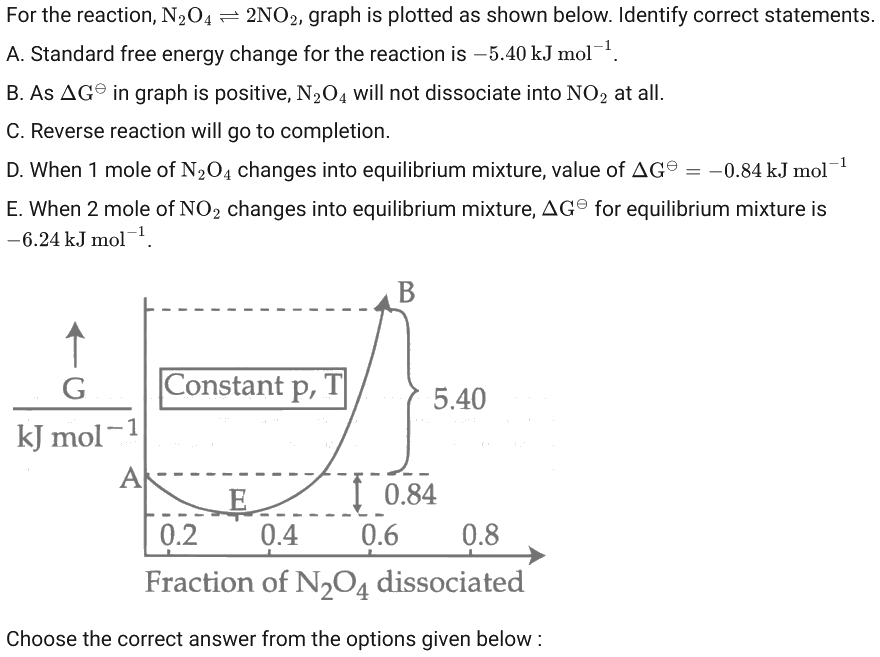
Answer: B
Consider the above sequence of reactions. The number of bromine atom(s) in the final product (P) will be :
Answer: B
The correct order of reactivity of the following benzyl halides towards reaction with KCN is : a: 4-hydroxybenzyl bromide , para b: 4-aminobenzyl bromide , para c: 4-nitrobenzyl bromide , para d: 3-nitrobenzyl bromide , meta
Answer: B
MX is a sparingly soluble salt that follows the given solubility equilibrium at 298 K. If the standard reduction potential for is , then the value of the standard reduction potential for the metal/metal insoluble salt electrode is ____ mV. (nearest integer) [Given: V]
Answer: 200
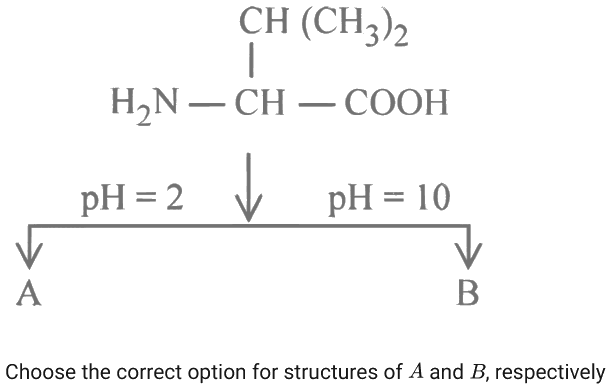
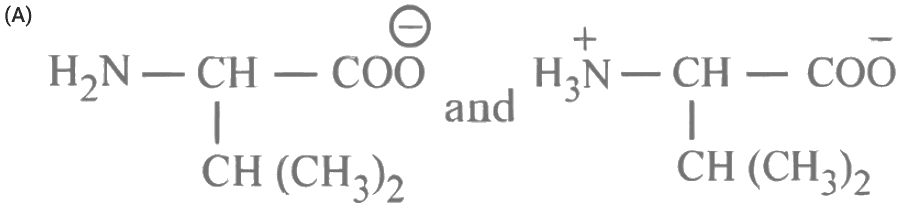
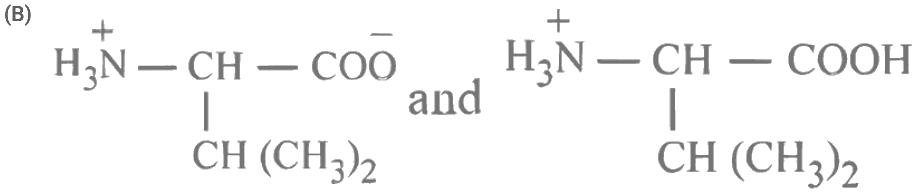
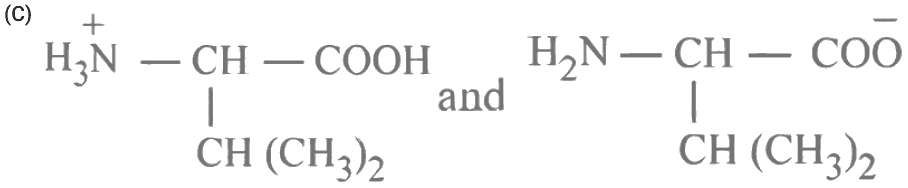
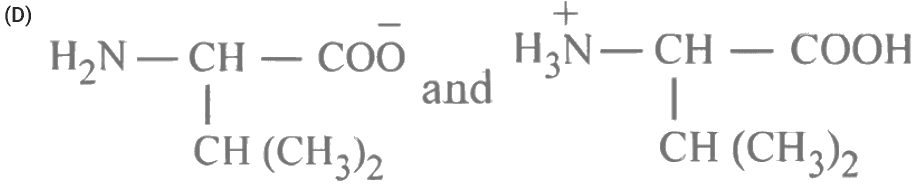
Answer: C
Consider the following half cell reaction The reaction was conducted with the ratio of . The pH value at which the EMF of the half cell will become zero is ____ . (nearest integer value)
Answer: 10
The equilibrium constant for decomposition of is at and total pressure at equilibrium is 1 bar. Under this condition, the degree of dissociation of water is ____ (nearest integer value). [Assume is negligible with respect to 1]
Answer: 5
The pH of a 0.01 M weak acid HX () is found to be 5 . Now the acid solution is diluted with excess of water so that the pH of the solution changes to 6 . The new concentration of the diluted weak acid is given as . The value of is ____ (nearest integer)
Answer: 25
The molar conductance of an infinitely dilute solution of ammonium chloride was found to be and the ionic conductance of hydroxyl and chloride ions are and , respectively. If molar conductance of solution of ammonium hydroxide is , its degree of dissociation is given by . The value of is . (Nearest integer)
Answer: 3
of is required to be dissolved in of water to produce a of at . The value of is . (Nearest integer) (Given : is assumed to dissociate completely in )
Answer: 3
In the following system, at equilibrium, upon addition of xenon gas at constant and , the concentration of
Answer: C
Given below are two statements : Statement I : A catalyst cannot alter the equilibrium constant () of the reaction, temperature remaining constant. Statement II : A homogeneous catalyst can change the equilibrium composition of a system, temperature remaining constant. In the light of the above statements, choose the correct answer from the options given below
Answer: A
Given below are two statements: Statement I : When a system containing ice in equilibrium with water (liquid) is heated, heat is absorbed by the system and there is no change in the temperature of the system until whole ice gets melted. Statement II : At melting point of ice, there is absorption of heat in order to overcome intermolecular forces of attraction within the molecules of water in ice and kinetic energy of molecules is not increased at melting point. In the light of the above statements, choose the correct answer from the options given below
Answer: C
If equal volumes of and (both are salts) aqueous solutions are mixed, which of the following combination will give a precipitate of at ? (Given ( at ) for )
Answer: B
