277 questions asked across 20 exam years, newest first
The minimum volume of water required to dissolve 0.1 g lead (II) chloride to get a saturated solution ( of , atomic mass of Pb = 207 u ) is :
Answer: C
Which of the following is a Lewis acid?
Answer: B

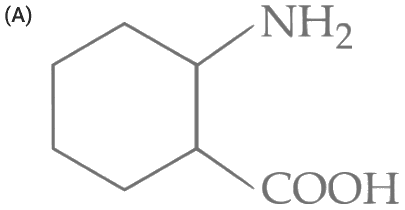
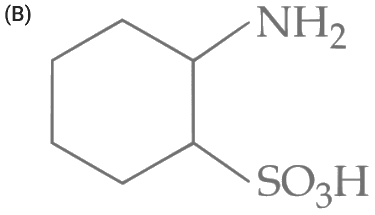
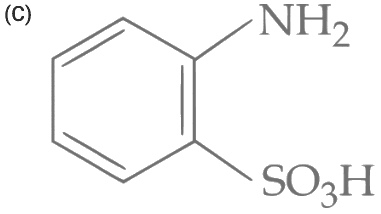
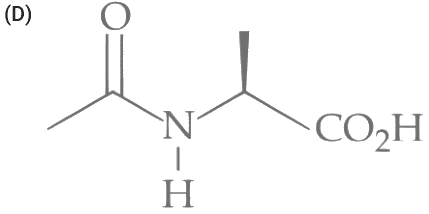
Answer: D
Xenon hexafluoride on partial hydrolysis produces compounds 'X' and 'Y' . Compounds 'X' and 'Y' and the oxidation state of Xe are respectively :
Answer: D
Which of the following compounds contain(s) no covalent bond(s)?
Answer: D
An aqueous solution contains an unknown concentration of . When 50 mL of a 1 M solution of is added, just begins to precipitate. The final volume is 500 mL. The solubility product of is . What is the original concentration of ?
Answer: D
An aqueous solution contains and . If the equilibrium constants for the formation of from is and that of from ions is then the concentration of ions in aqueous solution is :
Answer: C
Which of the following are Lewis acids?
Answer: A
An alkali is titrated against an acid with methyl orange as indicator, which of the following is a correct combination?
Answer: C
50 mL of 0.2 M ammonia solution is treated with 25 mL of 0.2 M HCl. If of ammonia solution is 4.75, the pH of the mixture will be :
Answer: D
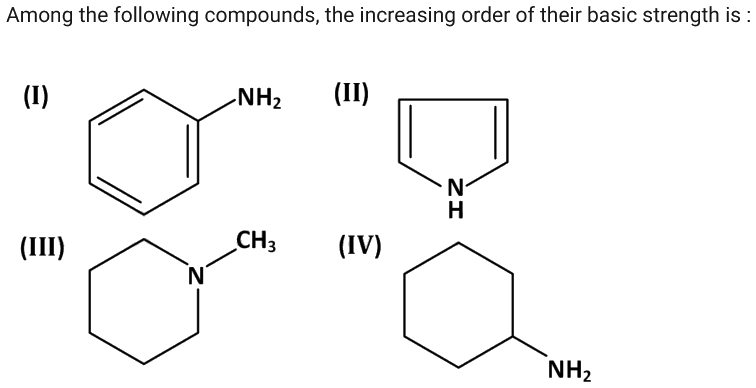
Answer: C
on partial hydrolysis with water produces a compound ‘X’. The same compound ‘X’ is formed when reacts with silica. The compound ‘X’ is :
Answer: C
Addition of sodium hydroxide solution to a weak acid (HA) results in a buffer of pH 6. If ionisation constant of HA is , the ratio of salt to acid concentration in the buffer solution will be :
Answer: C
The equilibrium constant at for a reaction is . If the initial concentration of all the four species were each, then equilibrium concentration of (in ) will be:
Answer: B
The following reaction is performed at The standard free energy of formation of is at . What is the standard free energy of formation of at ? ()
Answer: C
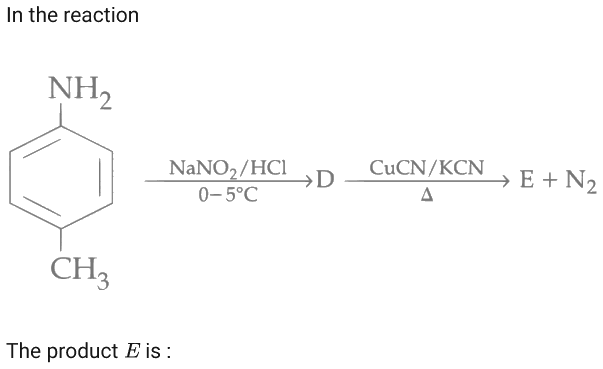
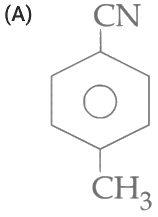
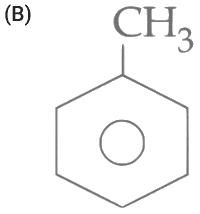
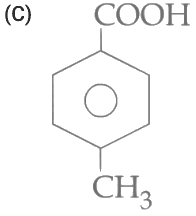

Answer: A
For the reaction . if where the symbols have usual meaning then the value of x is: (assuming ideality)
Answer: B
Among the following oxoacids, the correct decreasing order of acid strength is :
Answer: A
of are introduced into a vessel. If it dissociates as . At equilibrium, of are found to be present. The equilibrium constant of this reaction is
Answer: C
Given (i) (ii) . These equilibria show the following order of the relative base strength,
Answer: B
A solution containing of in of water freezes at . The apparent degree of dissociation of the salt is ( for , atomic mass: and )
Answer: B
The electron affinity of chlorine is 3.7 eV. 1 gram of chlorine is completely converted to ion in a gaseous state. (). Energy released in the process is
Answer: D
The solubility (in ) of AgCl () in a 0.1 M KCl solution will be
Answer: A
and are the equilibrium constants of the following reactions (I), (II) and (III) respectively: (I) (II) (III) The correct relation from the following is
Answer: B
Solubility product of silver bromide is . The quantity of potassium bromide (molar mass taken as ) to be added to 1 litre of 0.05 M solution of silver nitrate to start the precipitation of AgBr is :
Answer: B
