177 questions asked across 16 exam years, newest first
The electronic configuration of is whereas that of is . Which of the following is correct?
Answer: A
Compare the energies of following sets of quantum numbers for multielectron system. (A) (B) (C) (D) (E) Choose the correct answer from the options given below :
Answer: C
Given below are two statements : one is labelled as Assertion (A) and the other is labelled as Reason (R). Assertion (A) : reaction of occurs more readily than the reaction of . Reason (R) : The partially bonded unhybridized p-orbital that develops in the trigonal bipyramidal transition state is stabilized by conjugation with the phenyl ring. In the light of the above statements, choose the most appropriate answer from the options given below :
Answer: B
Match List I with List II Choose the correct answer from the options given below:
Answer: C
The electronic configuration of Einsteinium is : (Given atomic number of Einsteinium )
Answer: C
Based on Heisenberg's uncertainty principle, the uncertainty in the velocity of the electron to be found within an atomic nucleus of diameter is ____ (nearest integer) [Given : mass of electron , Planck's constant ] (Value of )
Answer: 58
Total number of electrons present in molecular orbitals of , and is ____.
Answer: 6
Number of Complexes with even number of electrons in orbitals is -
Answer: A
When and are the wave functions of atomic orbitals, then is represented by :
Answer: B
Evaluate the following statements related to group 14 elements for their correctness. (A) Covalent radius decreases down the group from to in a regular manner. (B) Electronegativity decreases from to down the group gradually. (C) Maximum covalency of is 4 whereas other elements can expand their covalency due to presence of d orbitals. (D) Heavier elements do not form bonds. (E) Carbon can exhibit negative oxidation states. Choose the correct answer from the options given below :
Answer: C
Total number of species from the following with central atom utilising hybrid orbitals for bonding is ________.
Answer: 6
The number of complexes from the following with no electrons in the orbital is ____.
Answer: C
Given below are two statements : one is labelled as Assertion (A) and the other is labelled as Reason (R). Assertion (A) : and molecule have pyramidal shape with a lone pair of electrons on nitrogen atom. The resultant dipole moment of is greater than that of . Reason (R) : In , the orbital dipole due to lone pair is in the same direction as the resultant dipole moment of the bonds. is the most electronegative element. In the light of the above statements, choose the correct answer from the options given below :
Answer: D
In an atom, total number of electrons having quantum numbers and is ____.
Answer: 6
The de-Broglie's wavelength of an electron in the orbit is ____ . ( Bohr's radius)
Answer: 8
If an iron (III) complex with the formula has no electron in its orbital, then the value of is
Answer: A
The maximum number of orbitals which can be identified with and is _________.
Answer: 4

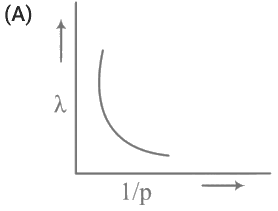
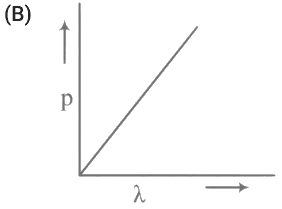
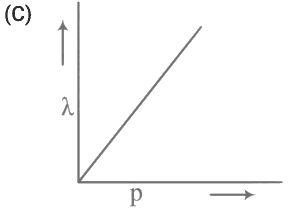
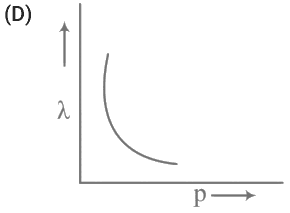
Answer: D
Given below are two statements : one is labelled as Assertion (A) and the other is labelled as Reason (R). Assertion (A) : In aqueous solutions is reducing while is oxidising in nature. Reason (R) : Extra stability to half filled electronic configuration is observed than incompletely filled electronic configuration. In the light of the above statements, choose the most appropriate answer from the options given below :
Answer: B
The number of radial node/s for orbital is :
Answer: C
The linear combination of atomic orbitals to form molecular orbitals takes place only when the combining atomic orbitals A. have the same energy B. have the minimum overlap C. have same symmetry about the molecular axis D. have different symmetry about the molecular axis Choose the most appropriate from the options given below:
Answer: D
The number of species from the following in which the central atom uses hybrid orbitals in its bonding is ____.
Answer: 4
The four quantum numbers for the electron in the outermost orbital of potassium (atomic no. 19) are
Answer: B
Given below are two statements : Statement (I) : The orbitals having same energy are called as degenerate orbitals. Statement (II) : In hydrogen atom, 3p and 3d orbitals are not degenerate orbitals. In the light of the above statements, choose the most appropriate answer from the options given below :
Answer: A
The total number of molecular orbitals formed from and atomic orbitals of a diatomic molecule is _________.
Answer: 8
